
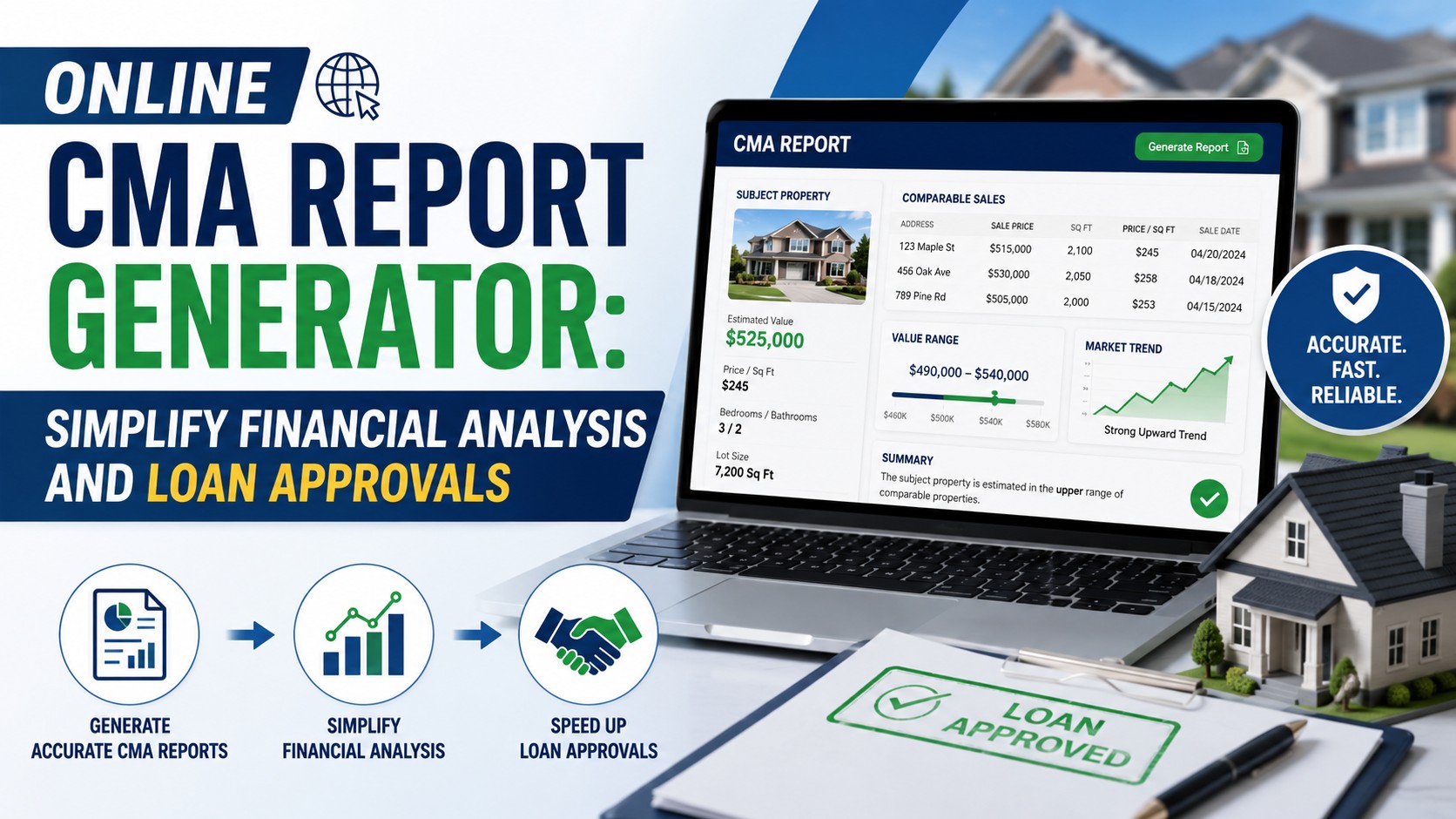

What an online CMA report generator does
An online CMA report generator turns financial inputs into a structured Credit Monitoring Arrangement report. In an Indian bank-loan context, that report helps explain a business's historical performance, projected operations, working capital needs and repayment capacity. The software can reduce repeated data entry and calculation work, while the borrower and preparer remain responsible for the figures and assumptions.
The distinction between preparation and appraisal is essential. Software produces statements and calculations; a bank decides whether the proposed finance is acceptable. A report with consistent totals may still rely on unrealistic sales growth or incomplete liabilities. Review the economic substance as carefully as the presentation.
When the online workflow is relevant
A CMA pack may be requested for a new cash credit facility, an overdraft, a working capital enhancement or a renewal. A term loan involving working capital may require related statements as well. The lender's checklist determines the periods, schedules and assessment approach required for the particular proposal.
An online workflow is especially relevant when figures need to remain connected across several years and statements. A revised collection period, for example, changes debtors and funding needs. A new term loan changes interest and repayment commitments. Recalculating those relationships in a connected report helps the preparer assess the effect of a change before submission.
Gather documents before entering data
Begin with a controlled source file rather than entering whatever figures are easiest to find. Obtain the audited accounts for completed years, current provisional accounts, bank statements, borrowing details and information supporting future operations. Label every period and record the cut-off date for provisional figures.
- Operating results: sales, direct costs, overheads, finance costs and tax.
- Balance sheet: capital, reserves, liabilities, fixed assets and current assets.
- Working capital records: stock details, receivable ageing and supplier terms.
- Debt information: outstanding principal, interest and repayment schedules.
- Projection evidence: orders, capacity, planned investment and funding sources.
Resolve opening-balance differences before projecting later years. When a liability or asset is uncertain, retain an explicit query instead of inserting an amount to balance the statement. The report should be traceable to the books and supporting documents.
Set assumptions that reflect the business
Sales projections should connect with capacity, customer demand and execution ability. A business planning substantial growth may need more staff, inventory and supplier payments before collections arrive. Include those costs and cash requirements rather than assuming that higher turnover immediately creates cash.
Document gross margin, overheads, inventory days, debtor days and creditor days separately. A change in any of these assumptions can affect the borrowing request. Compare the proposed holding levels with actual experience and explain material departures, including seasonal movements.
Where the software offers AI-assisted assumptions, treat them as a draft for review. An estimated growth rate is not evidence of future sales. Replace unsupported assumptions with figures the borrower can explain and retain the basis in the working papers.
Review the report as connected statements
| Statement or schedule | Review question |
|---|---|
| Operating statement | Do revenue, expenses and margins follow the assumptions? |
| Balance sheet analysis | Do assets and funding reflect the planned operations? |
| Current assets and liabilities comparison | Are working capital movements commercially reasonable? |
| Fund flow and cash flow | Can the sources of money support the proposed uses? |
| DSCR and repayment schedule | Is debt service affordable in each projected period? |
| Ratio analysis | Do liquidity, leverage and profitability tell a consistent story? |
Start with unusual movements rather than only reviewing the final ratios. A sudden rise in capital may represent a genuine promoter contribution, an assumption awaiting confirmation or an entry made to balance the model. Each possibility has a different implication for the lending proposal.
Check working capital calculations explicitly
Under the Tandon Committee approaches, MPBF Method I = 75% x (Total Current Assets - Other Current Liabilities). Method II = 75% x Total Current Assets - Other Current Liabilities. Other current liabilities means current liabilities excluding bank borrowings. Keep the brackets and definitions visible because the two formulas produce different results.
For current assets of Rs 120 lakh and other current liabilities of Rs 24 lakh, Method I gives Rs 72 lakh and Method II gives Rs 66 lakh. Method I implies a margin of 25% of the working capital gap; Method II implies 25% of total current assets. These calculations illustrate assessment methods rather than a commitment from any bank.
Under the turnover method associated with the Nayak Committee MSME approach, working capital requirement is 25% of projected annual turnover, borrower margin is 5% of turnover and bank finance is up to 20% of turnover. Confirm the applicable approach with the lender. Do not automatically select whichever calculation gives the largest borrowing amount.
Use sensitivity analysis before finalising the request
Run a downside case with slower collections, reduced sales or lower margins. Look at the resulting cash requirement and debt service together. If the plan needs additional funds, state who will provide them and when. An unsupported capital contribution is not a reliable way to close a funding gap.
For a term loan, check the repayment schedule against commissioning and operating ramp-up. An average DSCR can conceal a weak year, so review individual periods and opening cash. Document any material assumption about repayment holidays or interest treatment and confirm it against the proposed terms.
What Finxora provides for CMA preparation
Finxora's CMA report software prepares linked statements, MPBF under both methods, turnover-method calculations, DSCR analysis and 20+ financial ratios. It also provides sensitivity and break-even analysis, depreciation and EMI schedules, and exports in PDF, Excel and Word. The preparer can select the statements included in the download.
Use the sample reports to compare the output with your lender's requirements. Check the CMA pricing page for current plan details rather than relying on amounts quoted in an older article. Confirm any requirement that is specific to the bank before choosing software for that file.
A final submission checklist
- Match historical figures with the source accounts.
- Identify provisional and projected years clearly.
- Record the basis of every major assumption.
- Reconcile debt, promoter contribution and cash movements.
- Check the applicable working capital method and ratio definitions.
- Review the exported report for labels, periods and required annexures.
- Save the submitted version so later changes remain traceable.
An online generator is most valuable when it supports disciplined preparation. Keep the calculations linked, the inputs supported and the final borrowing request consistent with the business's operating cycle and repayment capacity.