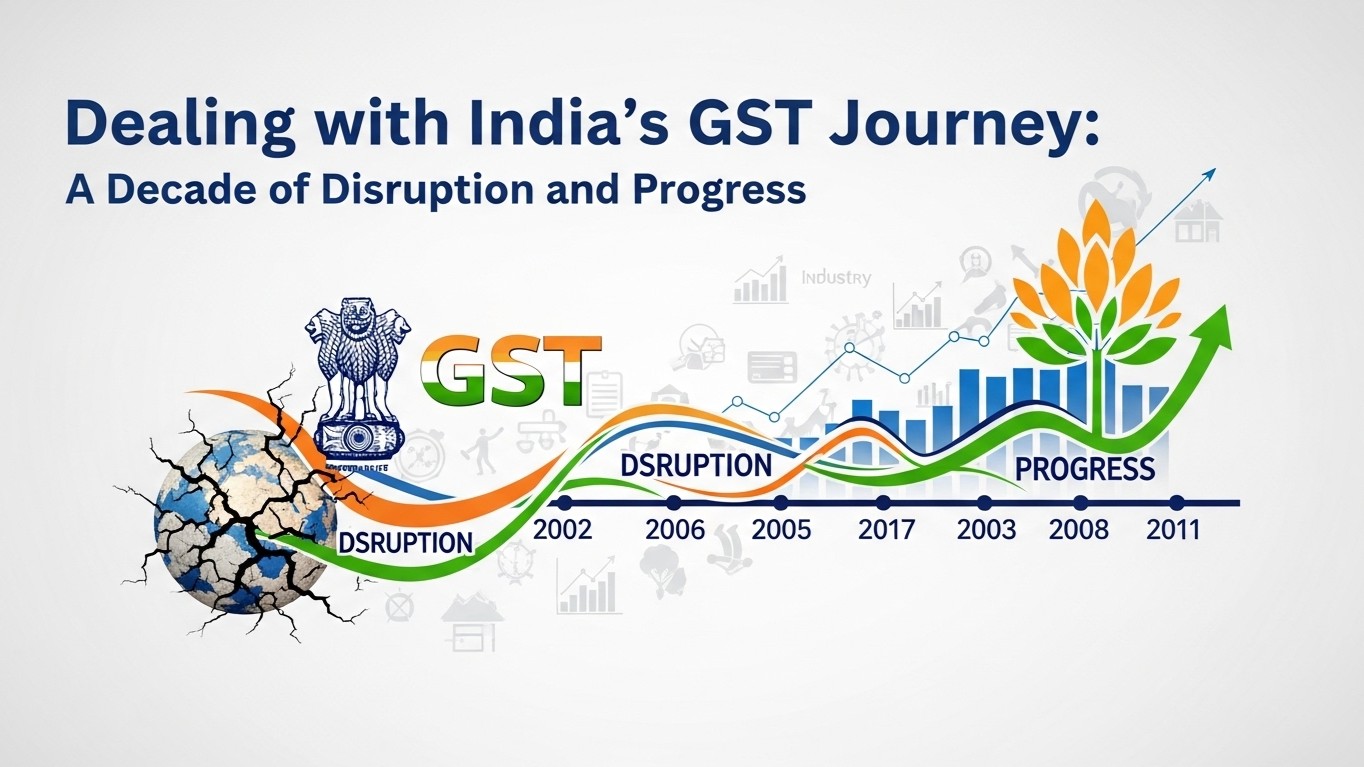

The Genesis of GST in India: A Long and Winding Road
The idea of a unified Goods and Services Tax (GST) in India wasn't an overnight sensation. It was the culmination of years of debate, discussions. Also, proposed reforms aimed at simplifying the country's complex indirect tax structure. Before GST, India operated under a multi-layered system with different central and state taxes, including excise duty, service tax, VAT. Also, octroi. This led to a cascading effect, where taxes were levied on taxes, increasing the final cost of goods and services for consumers.
Early Proposals and the Kelkar Task Force
The seeds of GST were sown in the early 2000s. The Kelkar Task Force on tax reforms, constituted in 2003, recommended a full GST to replace the existing indirect tax regime. This marked the first significant step towards a unified tax system. But, consensus among the central and state governments proved challenging, leading to many delays.
The Empowered Committee of State Finance Ministers
So, The Empowered Committee of State Finance Ministers (EC) played a vital role in shaping the GST plan. This committee, comprising finance ministers from different states, was responsible for addressing concerns, resolving disputes. Also, building consensus on the design and implementation of GST. The EC's recommendations formed the basis for subsequent GST legislation.
The Constitutional Amendment and GST Council
So, A major breakthrough came with the passage of the Constitution (101st Amendment) Act, 2016. This amendment paved the way for the introduction of GST by giving both the central and state governments concurrent powers to levy taxes on goods and services. The amendment also established the GST Council, a constitutional body responsible for making recommendations on GST rates, rules. Also, regulations.
The GST Council: A Federal Structure
The GST Council is chaired by the Union Finance Minister and includes finance ministers from all states. It operates on the principle of consensus, requiring a three-fourths majority for any decision. This federal structure ensures that the interests of both the central and state governments are taken into account.
Implementation Challenges and Initial Disruptions
GST was finally implemented on July 1, 2017, marking a significant milestone in India's economic history. Even so, the initial implementation was not without its challenges. Businesses faced difficulties in adapting to the new system, understanding the complex rules. Also, complying with the reporting requirements.
IT Infrastructure and GSTN
The Goods and Services Tax Network (GSTN), a non-governmental organization, was established to provide the IT infrastructure for GST. That said, the GSTN portal faced technical glitches and capacity issues in the early days, causing inconvenience to businesses and delaying tax filings. These issues were gradually addressed through system upgrades and improvements.
Compliance Burden and Small Businesses
The compliance burden under GST, particularly for small businesses, was a major concern. The requirement to file multiple returns every month and keep detailed records proved challenging for many small enterprises. The government responded by introducing simplified schemes, such as the composition scheme, to reduce the compliance burden for small taxpayers.
Evolution and Refinements of GST
You see, Since its implementation, GST has undergone several refinements and amendments to handle the initial challenges and improve its effectiveness. The GST Council has played a key role in making these changes based on feedback from businesses, taxpayers. Also, government departments.
Rate Rationalization and Simplification
One of the key areas of focus has been rate rationalization. The GST Council has gradually reduced the number of tax slabs and simplified the rate structure to cut down confusion and reduce tax evasion. Several items have been moved to lower tax slabs, providing relief to consumers and businesses.
E-way Bill and Anti-Evasion Measures
The introduction of the e-way bill system, a document required for the movement of goods worth more than INR 50,000, has helped to curb tax evasion and improve compliance. The e-way bill system allows tax authorities to track the movement of goods and prevent the generation of fake invoices.
Input Tax Credit (ITC) and Reconciliation
So, You see, The input tax credit (ITC) mechanism is a fundamental feature of GST. It allows businesses to claim credit for the GST paid on their inputs, reducing the cascading effect of taxes. Even so, ITC reconciliation has been a complex process, requiring businesses to match their purchase invoices with the supplier's sales invoices. The government has introduced measures to simplify ITC reconciliation and prevent fraudulent claims.
Impact of GST on the Indian Economy
You see, So, Here's the thing: GST has had a significant impact on the Indian economy, both positive and negative. While it has simplified the tax system and reduced the cascading effect of taxes, it has also faced challenges in terms of implementation and compliance.
Increased Tax Compliance and Revenue
You see, In fact, One of the major benefits of GST has been increased tax compliance. The unified tax system has made it easier for tax authorities to track transactions and prevent tax evasion. This has led to an increase in tax revenue for both the central and state governments.
Improved Efficiency and Logistics
GST has also improved efficiency in the supply chain and logistics sector. The elimination of multiple taxes and check posts has reduced transportation time and costs, making it easier for businesses to move goods across state borders. This has improved the competitiveness of Indian businesses in the global market.
Challenges for Small and Medium Enterprises (SMEs)
Here's the thing: While GST has benefited the economy as a whole, it has also posed challenges for small and medium enterprises (SMEs). The compliance burden and the need for technological upgrades have been particularly difficult for smaller businesses to manage. The government has taken steps to handle these challenges by providing training and support to SMEs.
The Future of GST in India
In fact, The journey of GST in India is far from over. The government continues to refine and improve the system to deal with the remaining challenges and make better its effectiveness. The focus is on simplifying the rules, reducing the compliance burden. Also, leveraging technology to improve tax administration.
Further Rate Rationalization and Simplification
You see, Further rate rationalization is expected to be a key priority in the coming years. The GST Council is likely to reduce the number of tax slabs and simplify the rate structure further. This will make it easier for businesses to comply with the GST rules and reduce the scope for tax evasion.
Use of Technology and Data Analytics
Here's the thing: In fact, The government is also leveraging technology and data analytics to improve tax administration and prevent fraud. The use of artificial intelligence and machine learning can help to identify suspicious transactions and patterns, enabling tax authorities to take timely action.
Expanding the GST Base
Expanding the GST base by bringing more goods and services under the GST net is another important goal. This will help to increase tax revenue and reduce the burden on existing taxpayers. Still, careful consideration is needed to make sure that the expansion does not adversely affect certain sectors or industries.
Conclusion: A Transformative Tax Reform
In fact, India's GST journey has been a transformative one, marked by both successes and challenges. While the initial implementation faced hurdles, the system has evolved and improved over time. GST has simplified the tax structure, increased tax compliance. Also, improved efficiency in the supply chain. As the government continues to refine and improve the system, GST is expected to play an even greater role in driving India's economic growth and development. For business professionals and finance enthusiasts, understanding the nuances of GST is important for handling the complexities of the Indian economy and making informed decisions.