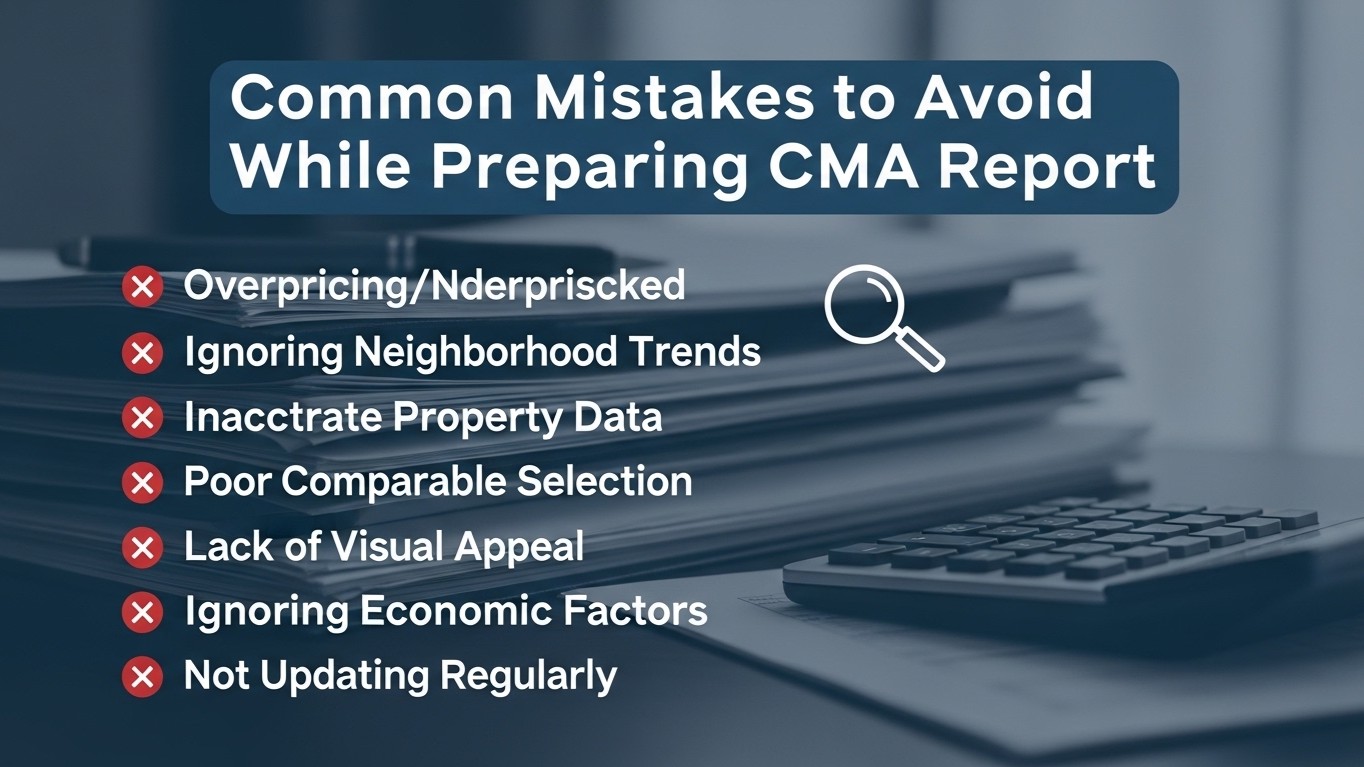

Crafting Accurate CMA Reports: Avoiding Common Pitfalls
A CMA (Credit Monitoring Arrangement) report is a critical document for businesses seeking loans or credit facilities. It provides lenders with a comprehensive overview of your financial performance and projections. A well-prepared CMA report can significantly increase your chances of securing funding, while a flawed one can lead to rejection. This tutorial outlines common mistakes to avoid during CMA report preparation, ensuring your report is accurate, reliable, and presents your business in the best possible light.
Understanding the Importance of a CMA Report
Before diving into the mistakes, it's crucial to understand the purpose of a CMA report. Lenders use it to assess your:
Financial stability: Your ability to meet existing debt obligations.
Repaying capacity: Your projected ability to repay the loan.
Business performance: Tracking your sales, expenses, and profitability.
Growth potential: Assessing your future prospects and sustainability.
Therefore, accuracy and transparency are paramount. Any errors or inconsistencies can raise red flags and damage your credibility.
Common Mistakes to Avoid
1. Inaccurate Data Entry
This is perhaps the most fundamental mistake. Inputting incorrect financial data can have a cascading effect, skewing all subsequent calculations and projections. This includes errors in:
Sales figures: Ensure sales data matches your accounting records.
Cost of goods sold (COGS): Verify the accuracy of your inventory valuation and direct costs.
Operating expenses: Double-check all expense categories for errors.
Assets and liabilities: Ensure your balance sheet accurately reflects your assets, liabilities, and equity.
Solution: Implement a rigorous data verification process. Cross-reference data with your accounting software, bank statements, and other relevant documents. Consider using data validation features in spreadsheet software to minimize manual errors.
2. Incorrect Application of Accounting Principles
A CMA report relies on sound accounting principles. Misapplying these principles can distort your financial picture. Common errors include:
Improper revenue recognition: Recognizing revenue before it is earned.
Incorrect depreciation methods: Using an inappropriate depreciation method for your assets.
Inadequate provision for bad debts: Underestimating the potential for uncollectible accounts receivable.
Misclassification of expenses: Incorrectly categorizing expenses, leading to inaccurate profitability analysis.
Solution: Ensure your accounting practices adhere to generally accepted accounting principles (GAAP) or other relevant accounting standards. Consult with a qualified accountant or financial advisor if you are unsure about the correct application of these principles.
3. Flawed Financial Projections
Projections are a crucial part of a CMA report, demonstrating your business's future potential. However, unrealistic or poorly supported projections can undermine your credibility. Common mistakes include:
Overly optimistic sales forecasts: Projecting unrealistic sales growth without sufficient justification.
Underestimating expenses: Failing to account for potential increases in operating costs.
Ignoring market trends: Failing to consider the impact of market conditions on your business.
Lack of supporting documentation: Not providing adequate evidence to support your projections.
Solution: Base your projections on realistic assumptions, supported by historical data, market research, and industry trends. Use sensitivity analysis to assess the impact of different scenarios on your projections. Document your assumptions clearly and transparently.
4. Inconsistent Formatting and Presentation
A well-organized and visually appealing CMA report is easier to understand and more persuasive. Inconsistent formatting and poor presentation can create a negative impression. Common mistakes include:
Inconsistent use of fonts and styles: Using different fonts and styles throughout the report.
Lack of clear headings and subheadings: Making it difficult for readers to navigate the report.
Poorly formatted tables and charts: Presenting data in a confusing or unclear manner.
Grammatical errors and typos: Making the report appear unprofessional.
Solution: Use a consistent formatting style throughout the report. Use clear headings and subheadings to organize the information. Format tables and charts in a professional and easy-to-understand manner. Proofread the report carefully for grammatical errors and typos.
5. Neglecting Key Ratios and Analysis
A CMA report should include key financial ratios and analysis to provide lenders with a deeper understanding of your business's financial performance. Neglecting these can weaken your report. Important ratios include:
Liquidity ratios: Current ratio, quick ratio (assess your ability to meet short-term obligations).
Solvency ratios: Debt-to-equity ratio, times interest earned ratio (assess your long-term financial stability).
Profitability ratios: Gross profit margin, net profit margin, return on equity (assess your profitability).
Activity ratios: Inventory turnover ratio, accounts receivable turnover ratio (assess your efficiency in managing assets).
Solution: Calculate and analyze these ratios, providing explanations for any significant trends or deviations. Compare your ratios to industry benchmarks to assess your performance relative to your peers.
6. Ignoring Compliance Requirements
CMA reports often need to adhere to specific guidelines set by lenders or regulatory bodies. Ignoring these requirements can lead to rejection. These requirements might include:
Specific reporting formats: Lenders may require a particular format for the CMA report.
Required disclosures: Certain disclosures may be required, such as contingent liabilities or related-party transactions.
Auditing requirements: Some lenders may require an audited financial statement.
Solution: Familiarize yourself with the specific requirements of the lender or regulatory body. Ensure your CMA report complies with all applicable guidelines and regulations.
7. Failure to Explain Negative Trends or Variances
If your CMA report reveals negative trends or significant variances from previous periods or industry benchmarks, it's crucial to provide clear and concise explanations. Ignoring these issues can raise concerns with lenders. Examples include:
Declining sales: Explain the reasons for the decline and outline your plans to address it.
Increasing expenses: Explain the factors driving the increase and demonstrate your efforts to control costs.
Negative cash flow: Explain the reasons for the negative cash flow and outline your strategies to improve cash flow management.
Solution: Be transparent and proactive in addressing any negative trends or variances. Provide clear and concise explanations, supported by data and analysis. Demonstrate your understanding of the issues and your commitment to resolving them.
Streamlining CMA Report Preparation with Finxora.com
Preparing an accurate and professional CMA report can be a time-consuming and complex process. Finxora.com offers a powerful software solution to streamline the process and minimize the risk of errors.
Benefits of Using Finxora.com:
Automated data entry: Import data directly from your accounting software, eliminating manual data entry errors.
Pre-built templates: Utilize professionally designed CMA report templates that comply with industry standards.
Automated calculations: Calculate key financial ratios and projections automatically, ensuring accuracy and consistency.
Error checking: Identify potential errors and inconsistencies in your data and calculations.
Customizable reports: Tailor your CMA reports to meet the specific requirements of different lenders.
Secure data storage: Store your financial data securely in the cloud.
By using Finxora.com, you can significantly reduce the time and effort required to prepare a CMA report, while also improving its accuracy and professionalism. This can increase your chances of securing funding and achieving your business goals. Visit Finxora.com to learn more and start your free trial.
Conclusion
Preparing a CMA report is a critical step in securing funding for your business. By avoiding the common mistakes outlined in this tutorial and leveraging the power of tools like Finxora.com, you can create a compelling report that showcases your business's financial strengths and potential. This, in turn, will significantly increase your chances of obtaining the financing you need to grow and succeed.
FAQs
What is the ideal frequency for updating a CMA report?
The frequency depends on the lender's requirements and the volatility of your business environment. Generally, updating it quarterly or semi-annually is recommended. However, if significant changes occur (e.g., a major contract win or loss), an update might be necessary sooner.
How can I ensure the projections in my CMA report are perceived as credible by lenders?
Base your projections on realistic assumptions derived from historical data, market research, and industry trends. Document all assumptions clearly, and use sensitivity analysis to demonstrate how different scenarios could impact your projections. Avoid overly optimistic forecasts without sufficient justification.
What are the key differences between a CMA report and a standard financial statement?
While both present financial information, a CMA report focuses on projected financial performance and includes a more detailed analysis of key financial ratios. Standard financial statements primarily report on historical performance. The CMA report is tailored to lenders' needs for assessing creditworthiness.
Is it always necessary to use software like Finxora.com for CMA report preparation?
While not strictly necessary, using specialized software significantly reduces the risk of errors, saves time, and ensures consistency. For complex businesses or those requiring frequent CMA reports, software is highly recommended. Simpler businesses with less frequent needs might manage with spreadsheets, but data accuracy becomes paramount.
What should I do if a lender identifies errors in my CMA report?
Acknowledge the errors promptly and provide corrected information as quickly as possible. Explain the cause of the errors and outline the steps you've taken to prevent similar mistakes in the future. Transparency and responsiveness are crucial for maintaining credibility.