

The Dawn of a New Era in Project Reporting
In the fast-paced world of business, project reports are the lifeblood of strategic decision-making. They provide crucial insights into progress, resource utilization, and potential roadblocks. However, traditional project reporting methods, often reliant on manual data entry, disparate spreadsheets, and retrospective analysis, are frequently time-consuming, prone to error, and limited in their ability to offer forward-looking insights. For business professionals and finance enthusiasts striving for peak operational efficiency and superior project outcomes, this conventional approach often falls short.
Enter Artificial Intelligence (AI). AI is not just a buzzword; it’s a transformative technology poised to revolutionize how we plan, execute, and report on projects. By automating tedious tasks, unearthing hidden patterns, and providing predictive capabilities, AI is moving project reporting from a historical recounting to a dynamic, proactive, and insightful process.
The Evolution of Project Reporting: From Manual to Intelligent
For decades, project reporting has undergone several iterations. Initially, it involved painstaking manual updates on whiteboards and paper logs. The advent of spreadsheets brought some structure, allowing for basic calculations and summaries. Project management software further streamlined processes, centralizing data and enabling real-time tracking. Yet, even with these advancements, the core challenge remained: extracting truly actionable insights from vast amounts of data, predicting future trends, and adapting quickly to unforeseen changes.
The AI paradigm shift addresses these limitations head-on. By leveraging machine learning, natural language processing, and advanced analytics, AI tools can process data at a scale and speed impossible for humans, translating raw information into strategic intelligence.
How AI Transforms Project Reporting
AI's impact on project reporting is multifaceted, touching every stage from initial planning to final delivery. Here’s a closer look at its transformative capabilities:
1. Automated Data Collection and Processing
One of the most significant time sinks in traditional reporting is manual data collection and consolidation. AI-powered systems can automatically gather data from various sources – project management software, financial systems, communication platforms, and even sensor data – and integrate it into a cohesive view. This automation ensures real-time updates, eliminates human error, and frees up project managers to focus on strategic tasks rather than data wrangling.
2. Predictive Analytics for Risk Management
AI excels at identifying patterns and predicting future outcomes based on historical data. For project reports, this means moving beyond reactive problem-solving. AI algorithms can analyze past project performance, market trends, and external factors to forecast potential delays, budget overruns, or resource shortages. This enables project managers to proactively mitigate risks before they escalate, ensuring smoother project execution. For a deeper understanding of this capability, you can explore resources on predictive analytics in project management from authoritative sources like the Project Management Institute.
3. Enhanced Resource Allocation and Optimization
Optimizing resources – be it human capital, equipment, or budget – is critical for project success. AI can analyze resource availability, skill sets, project demands, and historical utilization patterns to recommend optimal allocation strategies. This ensures that the right resources are deployed at the right time, minimizing idle time, preventing burnout, and maximizing productivity. For businesses evaluating software solutions to achieve such efficiencies, understanding the investment costs associated with advanced tools is a crucial first step in assessing ROI.
4. Intelligent Anomaly Detection
Deviations from the plan, no matter how small, can have cascading effects. AI systems can continuously monitor project metrics and instantly flag anomalies that might indicate a problem – be it an unexpected increase in costs, a significant delay in a critical path task, or an unusual dip in team productivity. This early warning system allows for rapid intervention, preventing minor issues from becoming major crises.
5. Dynamic Reporting and Visualization
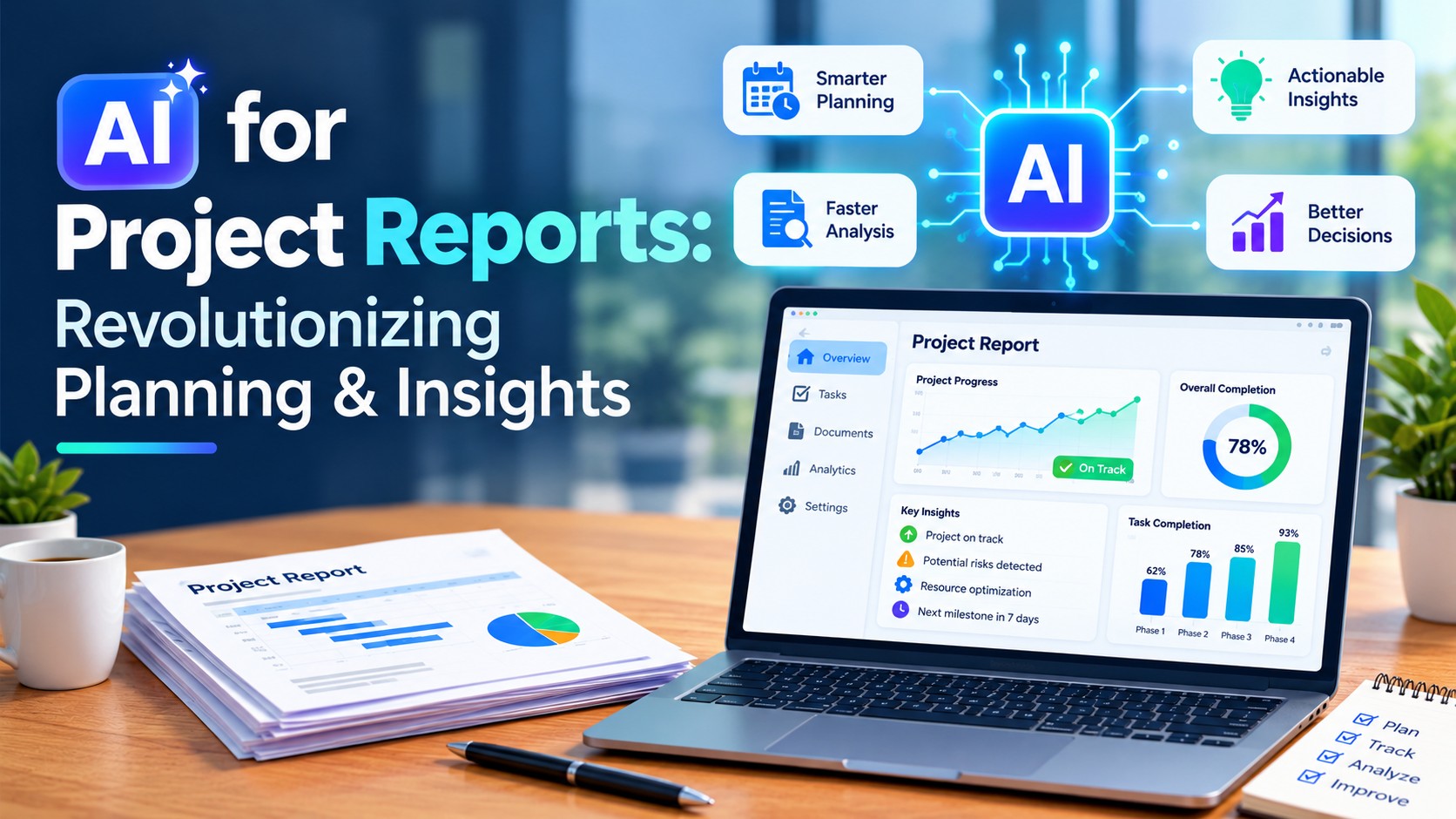
Static reports are a thing of the past. AI-powered reporting tools generate dynamic, interactive dashboards that provide customizable views of project data. Stakeholders can drill down into specific metrics, visualize trends, and gain insights tailored to their needs. Natural Language Generation (NLG) capabilities can even translate complex data into clear, concise narrative summaries, making reports accessible to a broader audience.
Key Benefits for Business Professionals
The integration of AI into project reporting translates into tangible benefits for businesses and finance professionals:
- Increased Accuracy and Reliability: Eliminates human error in data collection and analysis.
- Significant Time and Cost Savings: Automates repetitive tasks, freeing up valuable human resources.
- Proactive Decision-Making: Predictive insights enable early intervention and strategic adjustments.
- Improved Stakeholder Communication: Dynamic, easily digestible reports foster transparency and trust.
- Competitive Advantage: Faster, more informed decision-making leads to better project outcomes and market responsiveness.
Implementing AI in Your Project Reporting Strategy
Adopting AI for project reports doesn't have to be an overnight overhaul. Here’s a strategic approach:
1. Start Small with Pilot Projects
Identify a specific project or a particular reporting challenge where AI can demonstrate immediate value. This allows your team to gain experience, understand the technology's capabilities, and refine processes before a broader rollout.
2. Choose the Right Tools and Integration
Evaluate AI solutions that integrate seamlessly with your existing project management, ERP, and financial systems. Look for platforms that offer scalability, robust security features, and user-friendly interfaces.
3. Prioritize Data Quality
AI's effectiveness hinges on the quality of the data it processes. Invest in data cleansing, standardization, and governance to ensure your AI models are fed accurate and reliable information. Remember the adage: “Garbage in, garbage out.”
4. Train and Upskill Your Team
Successful AI adoption requires human expertise. Train your project managers and analysts to understand AI-generated insights, interpret data visualizations, and leverage the tools effectively. Emphasize change management to ensure smooth transition and user acceptance.
Challenges and Considerations
While the benefits are immense, implementing AI in project reporting comes with its own set of challenges:
- Data Privacy and Security: Handling sensitive project and financial data requires robust security protocols and compliance with regulations like GDPR. Understanding best practices for data privacy in AI systems is paramount.
- Initial Investment: The upfront cost of AI software, infrastructure, and training can be substantial. A clear ROI analysis is crucial.
- Integration Complexities: Integrating new AI systems with legacy IT infrastructure can be challenging and require significant planning.
- Ethical AI Use: Ensuring AI models are unbiased and transparent in their recommendations is vital to maintain trust and fairness.
The Future of Project Reporting with AI
The trajectory of AI in project reporting points towards increasingly autonomous and intelligent systems. We can anticipate AI tools that not only predict but also proactively suggest optimal courses of action, learn from every project, and continuously refine their recommendations. Project managers will evolve into strategic orchestrators, leveraging AI as an indispensable partner to navigate complexity and drive unprecedented levels of efficiency and insight.
Conclusion: Empowering Decisions with Intelligent Insights
AI for project reports is more than just an technological upgrade; it's a fundamental shift in how organizations approach planning, execution, and performance measurement. By automating mundane tasks, providing unparalleled predictive capabilities, and delivering dynamic, actionable insights, AI empowers business professionals to make more informed decisions, mitigate risks effectively, and ultimately achieve superior project outcomes. Embracing AI in project reporting isn't just about staying competitive; it's about redefining the very essence of project success in the digital age.